
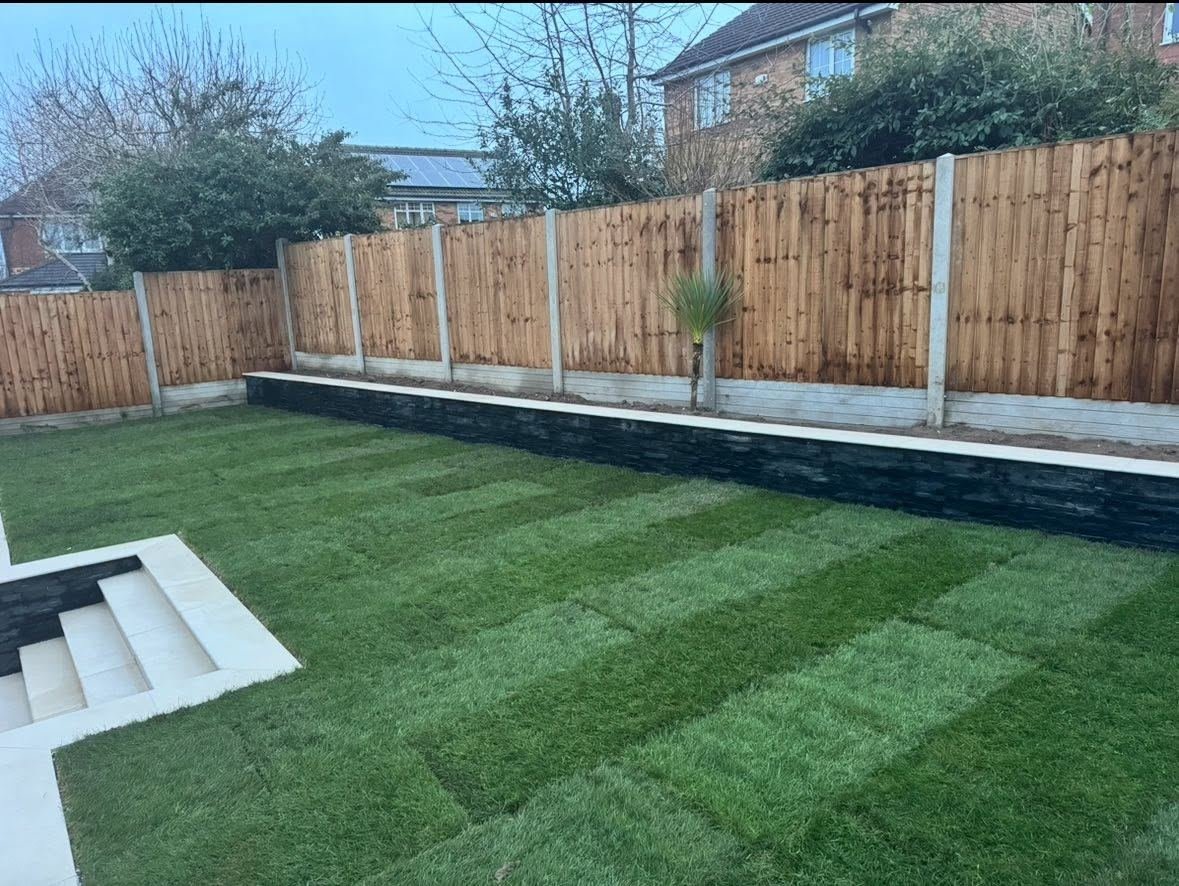
Fencing and Screening Built to Handle the Weather
Fencing and screening cover setting posts and fitting panels, boards or slatted screens to create a boundary or privacy feature within a garden. It's usually needed when existing fencing has rotted or leant over, when a garden needs more privacy from neighbouring properties, or as part of a wider design and build project. The work involves setting posts square and plumb, then fitting panels, boards or screening with gravel boards to keep timber clear of the ground. Concrete posts and gravel boards make a real difference to longevity, since ground contact is the main reason timber fencing fails early.
Slatted screening has become popular for gardens wanting a more contemporary look, giving privacy without the fully enclosed feel of a traditional closeboard fence, and works well alongside a bespoke design across Doncaster and South Yorkshire.
What's included
- Concrete or timber posts set for a secure fit
- Closeboard, panel or slatted screening fitted
- Old fence panels and posts removed
- Gravel boards fitted to keep timber off the ground
- Gates hung and adjusted to close properly
- Screening designed to suit the garden's overall look
- Fence lines squared and levelled throughout
Frequently Asked Questions About Fencing & Screening
What is the difference between fencing and screening?
Fencing typically refers to a full boundary, closeboard or panel, that marks the edge of a garden and provides security as well as privacy. Screening usually refers to a more decorative slatted or louvred feature, often used to create privacy in a specific spot or divide a garden into zones, without necessarily forming the main boundary. Both are built using similar post and panel methods, so the choice usually comes down to the look and purpose wanted.
When do I need new fencing or screening?
New fencing is usually needed when existing panels have rotted at the base, posts have leant over after storms, or a boundary no longer offers enough privacy or security. Screening is often added when a garden needs privacy in a particular area, such as around a seating space, without enclosing the whole plot. Replacing whole sections is generally more practical than patching once several panels or posts have failed.
How much does fencing or screening cost?
Costs depend on the length of boundary or screening, the materials chosen, and how many gates or awkward angles are involved. Slatted screening and higher specification timber typically cost more than standard closeboard panels. An accurate price needs a site visit, since access and ground conditions both affect installation time.
How long does fencing installation take?
Most domestic fencing jobs take between one and several days, depending on the length of the boundary and how many posts need setting. Concrete needs time to cure before panels are fitted, which can add a short pause partway through the job. Awkward access, sloping ground or removing old fencing first can all extend the timescale.
Is professionally installed fencing worth it?
Professionally installed fencing is generally worth it because post depth and levelling are the details most likely to be rushed, and these determine whether a fence stands up to wind. A shallow or poorly set post is the most common reason fencing blows over in bad weather. Professional installation also tends to produce a straighter, more consistent fence line across the full boundary.
How long does fencing last?
Treated timber fencing with concrete posts and gravel boards typically lasts fifteen to twenty years, while some slatted screening can last longer depending on the material and finish. Lifespan depends heavily on how well posts were set and whether gravel boards kept timber clear of wet ground. Exposure to wind, shade or damp ground can all shorten the life of a fence regardless of material.
Other services
Ready to transform your garden?
Tell us about the job and we'll give you honest advice and a clear quote, no pressure.