
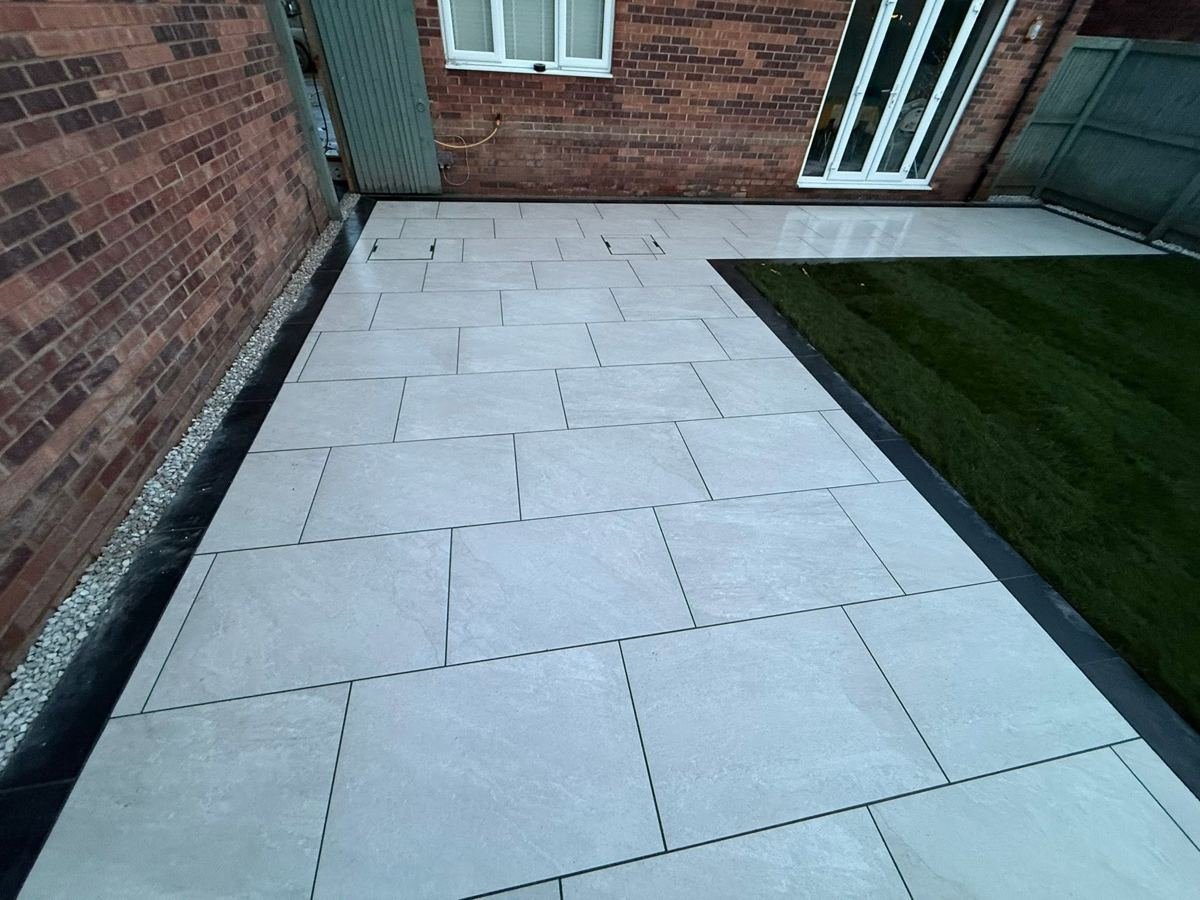
Patios Built on Proper Foundations
A patio is a hard paved outdoor surface, typically porcelain or natural stone, laid on a properly prepared base to create a durable space for seating, dining or entertaining. It's usually chosen when a garden has no real seating area, when existing paving has cracked or dated badly, or as part of a wider garden design and build project. The work involves excavation, a compacted sub base, then laying and jointing the chosen paving with correct falls so water drains away rather than pooling on the surface. Porcelain has become the popular choice for its resistance to staining, frost and fading, while natural stone still suits gardens looking for a more traditional finish.
Getting the sub base and drainage right is what keeps a patio flat and crack free through wet South Yorkshire winters, long after a rushed job would have started to move or discolour.
What's included
- Premium porcelain paving in a range of finishes
- Natural stone and sandstone options available
- Contrasting borders and detailing where wanted
- Correct falls and drainage built in from the start
- Sealed, crisp jointing for a clean finish
- Laid on properly prepared foundations
- Designed to suit contemporary or traditional gardens
Frequently Asked Questions About Patios & Paving
What is the difference between porcelain and natural stone?
Porcelain is a manufactured material that's extremely hard wearing, resistant to staining and frost, and needs very little ongoing maintenance to keep its colour. Natural stone, such as sandstone, has more variation and character but can need periodic sealing to keep it looking its best. Both are laid using similar methods, so the choice usually comes down to appearance and maintenance preference rather than installation.
When do I need a new patio?
A new patio is usually needed when existing paving has cracked, sunk or become uneven, when a garden has no proper seating area, or when a design and build project calls for a patio as part of a wider scheme. Loose or wobbly slabs are often a sign the original base was never properly prepared. Replacing rather than patching tends to be more cost effective once several areas have failed.
How much does a patio cost?
Patio costs depend on the size of the area, the paving material chosen, and how much groundwork is needed, particularly where levels change or drainage is more complex. Porcelain tends to cost more than standard paving, while natural stone sits somewhere in between depending on the finish. An accurate price needs a site visit, since access and existing ground conditions both affect the amount of preparation involved.
How long does patio installation take?
Most domestic patios take between a few days and around two weeks, depending on the size of the area and how much groundwork is needed. Excavation and sub base preparation usually take longer than laying the paving itself. Poor weather can extend timescales, particularly during excavation, since a saturated base is harder to compact properly.
Will the patio drain properly?
Yes, correct falls and drainage are built into every patio so water runs away cleanly rather than pooling on the surface. This protects both the patio itself and the property nearby, since standing water against a house can eventually cause damp problems. Getting the falls right at the sub base stage is far more important to long term drainage than the paving material chosen.
How long does a patio last?
A well built patio with a properly prepared sub base and correctly jointed paving can last for decades with only occasional cleaning and re-jointing. Porcelain in particular is highly resistant to frost damage and staining, which helps it hold its appearance over time. Longevity depends far more on the quality of the groundwork underneath than on the paving material chosen.
Other services
Ready to transform your garden?
Tell us about the job and we'll give you honest advice and a clear quote, no pressure.